From China, the Korean Peninsula, Europe, and Southeast Asia, imported goods that have crossed the seas since ancient times were accepted as symbols of power and refinement due to their preciousness and rarity, and became objects of strong admiration. They became prestige goods for those in power, or were cherished as tea ceremony utensils, and were carefully passed down through generations. Experience the various "beauties of foreign lands" that the Japanese people discovered—feel their gaze.
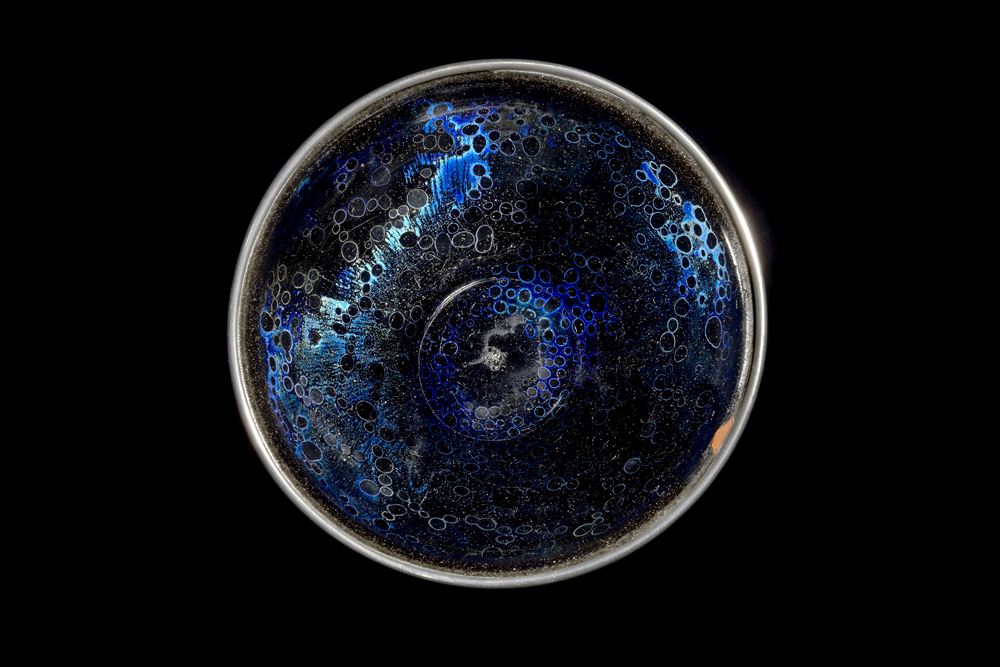
TOP image:National Treasure; Yōhen Tenmoku Tea Bowl
This tea bowl was crafted at the Jian kilns in Fujian Province, China, during the Southern Song dynasty (12th–13th century). The interior and exterior surfaces are adorned with iridescent blue and purple spots that emerged naturally during the firing process. Only three "Yohen Tenmuko" bowls exist today; all are located in Japan and designated as National Treasures. This specific bowl was once owned by Tokugawa Ieyasu (1543–1616) before being bestowed upon his eleventh son, Yorifusa (1603–1661), the first head of the Mito Tokugawa family. In 1918, Heitaro Fujita, the eldest son of Denzaburo Fujita, acquired the piece at an auction held by the Mito Tokugawa family, and it has remained in the Fujita collection ever since.